Termite Control
Professional Termite Inspection, Treatment and Prevention by Malabar Pest Control
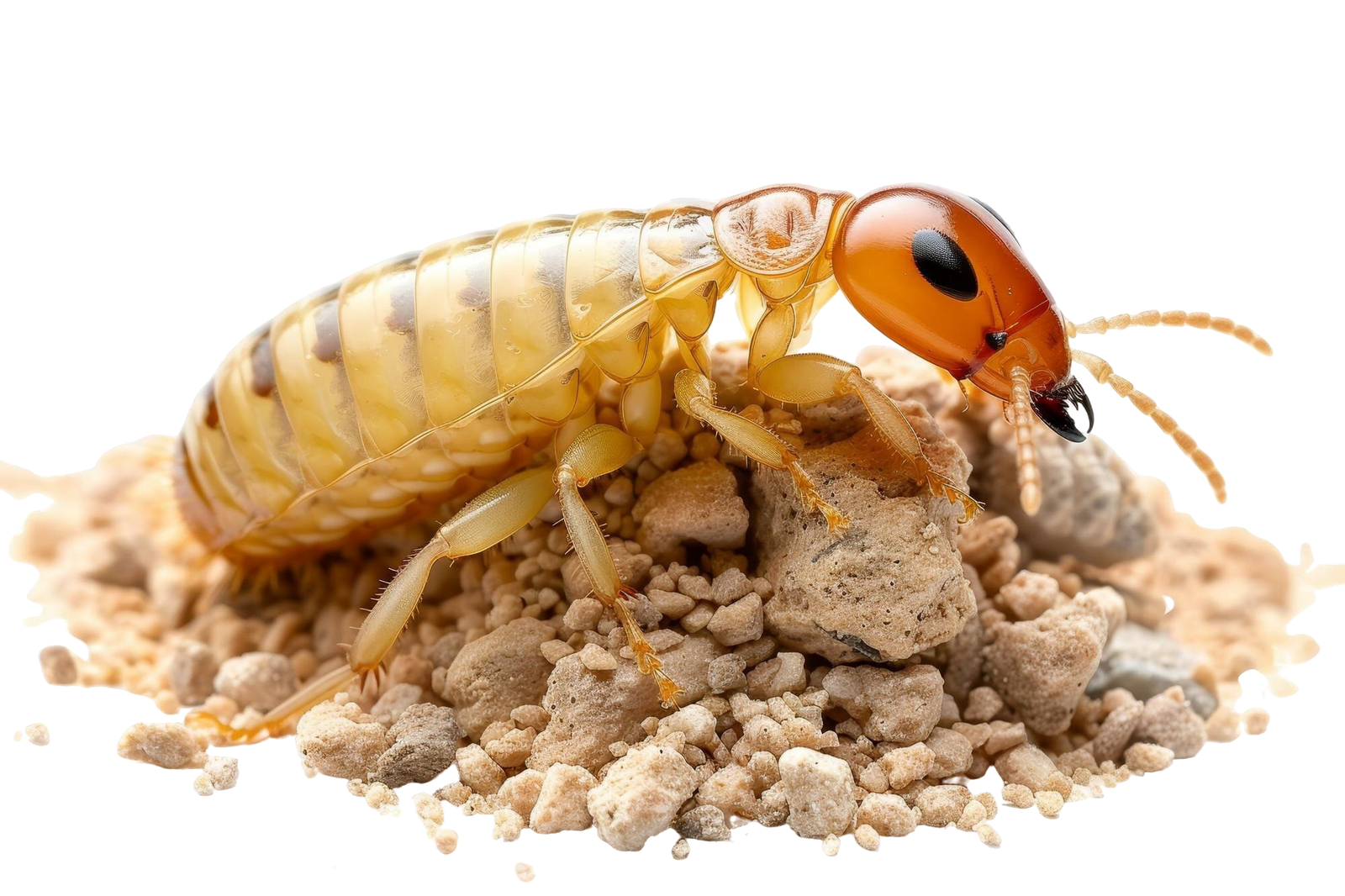
Termites are wood-destroying insects that feed primarily on cellulose, a substance found in wood, paper, cardboard and other plant-based materials. They can cause significant damage to buildings, wooden structures, furniture and other property if their activity remains undetected.
Unlike many other pests, termites often remain hidden inside soil, walls, wooden structures and concealed building components. An infestation may continue for months or years before visible signs appear. By the time damage becomes noticeable, the termites may have already affected important structural or decorative materials.
In Dubai, termite management is important for villas, residential apartments, commercial buildings, warehouses, hotels, offices and other properties containing wood or cellulose-based materials. Termites may enter through soil contact, foundation gaps, service penetrations, expansion joints and concealed structural openings.
At Malabar Pest Control, we provide professional termite inspection, treatment and preventive services across Dubai. Our approach focuses on identifying termite activity, assessing the extent of damage, determining likely entry routes and selecting an appropriate treatment strategy.
Using an Integrated Pest Management (IPM) approach, we combine inspection, targeted treatment, moisture management, structural recommendations and monitoring to help protect properties against termite activity and reduce the risk of future infestation.
Types of Termites and Their Life Cycle
Correct identification is essential because termite species differ in their nesting behaviour, moisture requirements, feeding patterns and treatment needs.
Subterranean Termites
Subterranean termites live primarily in soil or other protected, moisture-retaining environments. They construct tunnels to travel between their colony and food sources.
These termites are among the most important building pests because they can attack wooden components from concealed entry points and may remain undetected for extended periods.
Common activity and entry locations:
- Soil around building foundations
- Ground-contact timber
- Foundation joints and cracks
- Pipe and cable penetrations
- Expansion joints and concealed gaps
- Wooden door frames and skirting boards
- Areas with persistent moisture or leaks
Behaviour: Subterranean termites often build mud tubes that protect them from drying out while travelling between the colony and a food source. They may attack timber from inside, leaving the outer surface apparently intact.
Effective management may involve soil treatment, targeted treatment of affected structures, appropriate baiting systems or a combination of methods selected according to site conditions and applicable requirements.
Drywood Termites
Drywood termites live directly inside dry wood and generally do not require contact with soil. They obtain moisture from the wood and the surrounding environment.
Common hiding places:
- Wooden furniture and cabinets
- Door and window frames
- Timber ceilings and decorative fittings
- Roof timber and wooden beams
- Wooden doors and built-in wardrobes
- Other dry wooden components
Signs of activity: Small piles of dry, pellet-like termite droppings, known as frass, may accumulate near infested timber. Other signs can include hollow-sounding wood, damaged internal galleries and small openings in the wood surface.
Behaviour: Drywood termite colonies may remain entirely within individual wooden components. The appropriate treatment depends on the location and extent of the infestation, access to the affected timber and the species involved.
Dampwood Termites
Dampwood termites are associated with wood containing high moisture levels. They are generally more closely linked to persistently damp or decaying timber than to dry, well-maintained indoor wood.
Potential locations:
- Water-damaged timber
- Areas affected by persistent leaks
- Damp external wooden structures
- Decaying wood and organic material
- Moisture-damaged building components
Behaviour: Their presence may indicate a moisture problem as well as termite activity. Repairing leaks, correcting water ingress and replacing severely damaged timber where necessary are important parts of management.
Note: Termite species should be identified by a qualified professional wherever possible. The treatment approach should be based on the actual species, infestation location and building conditions.
Understanding the Termite Life Cycle
Termites undergo incomplete metamorphosis and develop through several stages.
Egg stage
The queen lays eggs within the colony. Eggs are usually concealed in protected nesting areas.
Immature stage
Young termites develop through successive growth stages, gradually becoming members of the colony's different castes.
Worker and soldier castes
Workers generally forage for food, maintain the nest and care for developing termites. Soldiers help defend the colony. Their exact roles and appearance vary by species.
Reproductive adults
A mature colony may produce winged reproductive termites, known as alates or swarmers. These leave the colony during dispersal flights and may establish new colonies if conditions are suitable.
Some established colonies can survive for many years. Because most of the colony remains hidden, removing visible swarmers or treating a small area of damaged wood does not necessarily eliminate the source.
Signs of a Termite Infestation
Termite activity can be difficult to detect because much of the damage occurs inside wood, beneath floors or within concealed building structures.
Common warning signs include:
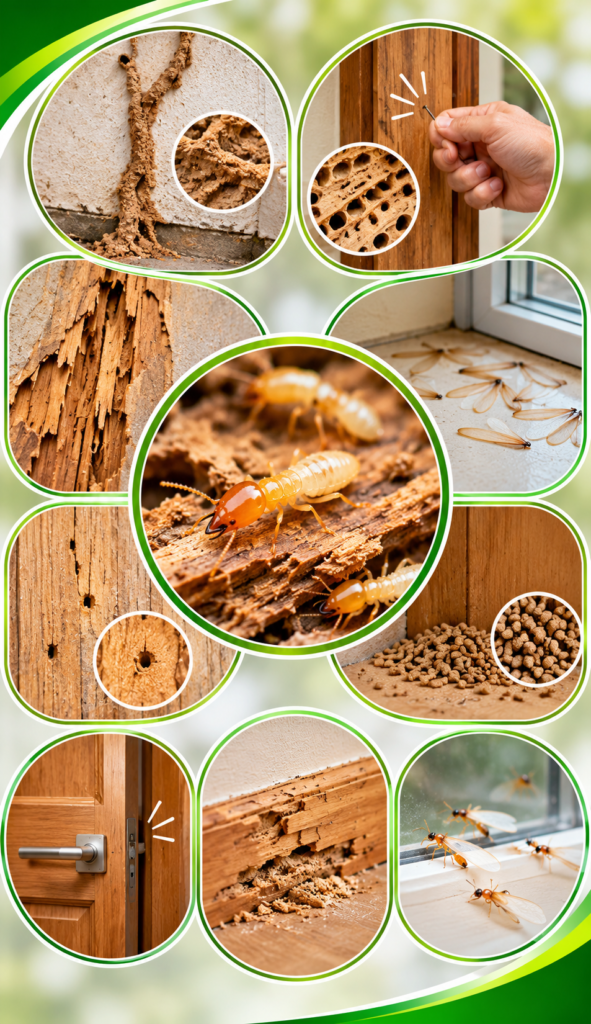
Mud tubes: Subterranean termites may construct narrow mud tubes along foundations, walls, pipes and other surfaces. These tubes protect them while travelling between the colony and food sources.
Hollow-sounding timber: Wood may sound hollow when tapped because termites have consumed internal portions.
Damaged or blistered wood: Timber surfaces may become uneven, blistered or weakened as termites create internal galleries.
Discarded wings: Winged reproductive termites may shed their wings after swarming. Accumulated wings near windows, doors or light sources may indicate nearby termite activity.
Small openings in timber: Certain termite infestations may produce small openings in wood surfaces, although these signs vary by species.
Drywood termite droppings: Small, hard, pellet-like droppings may accumulate beneath infested wooden components.
Doors and windows becoming difficult to operate: Moisture and structural damage associated with termite activity may affect wooden frames. This sign alone does not confirm termites.
Visible damage to wooden structures: Skirting boards, door frames, cabinets, flooring and other timber components may show damage, weakening or internal galleries.
Repeated termite swarmers: Winged termites appearing indoors can indicate a nearby colony or an external swarm entering through openings. Professional identification is needed to determine the source.
If termite activity is suspected, avoid disturbing the affected area unnecessarily. A professional inspection can help establish the species, activity level, damage extent and most suitable control method.
Causes of Termite Infestations and Common Harbourage Areas
Termites require a suitable food source and conditions that allow them to survive. Moisture, soil contact, concealed openings and untreated timber can contribute to termite access and activity.
Common Causes
Direct soil-to-wood contact
Wooden components touching soil may provide a direct route for certain termite species.
Foundation gaps and structural openings
Cracks, joints and unsealed service penetrations may provide access to concealed building areas.
Moisture and water leaks
Leaking pipes, damp walls, poor drainage and water ingress can create favourable conditions for moisture-dependent termites and increase the vulnerability of timber.
Untreated or susceptible timber
Wood and other cellulose-based materials can provide food for termites when accessible.
Concealed construction conditions
Termites may enter through hidden areas that are difficult to inspect during routine maintenance.
Timber debris
Unnecessary wood, cardboard and other cellulose-based materials close to buildings may provide additional food sources.
Previous infestation
If the source of an earlier infestation has not been fully addressed, termite activity may persist or recur.
Common Termite Harbourage and Entry Areas
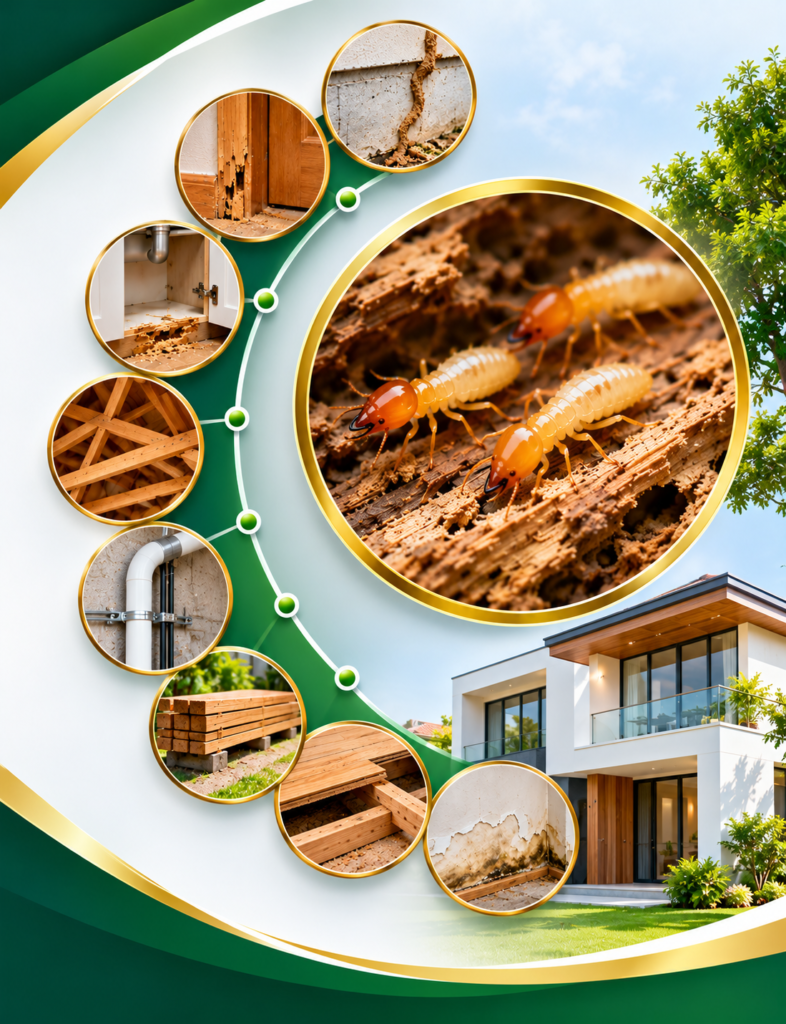
- Building foundations and foundation joints
- Wooden door frames and skirting boards
- Built-in wardrobes and kitchen cabinets
- Wooden flooring and subfloor spaces
- Roof timber and concealed wooden structures
- Pipe and cable penetrations
- Expansion joints and construction gaps
- Damp or water-damaged timber
- Timber stored close to the building
- Concealed areas behind wall finishes and fittings
Termite activity may extend beyond the visibly damaged area. A thorough inspection should assess likely access routes and adjacent structures before treatment is selected.
Our Professional Termite Control Methods and Treatments – Integrated Pest Management (IPM)
At Malabar Pest Control, our termite-control programme follows an Integrated Pest Management (IPM) approach. We assess the property, identify the termite species where possible, investigate entry routes and select a treatment strategy appropriate to the infestation and building conditions. Depending on the situation, termite management may involve soil treatment, targeted structural treatment, baiting systems, treatment of affected timber, moisture correction and preventive measures.
Detailed Termite Inspection
Our technicians inspect the property for visible termite activity, damaged timber, mud tubes, discarded wings, droppings and potential entry points.
The inspection may include:
- Building foundations and accessible perimeter areas
- Door frames, skirting boards and built-in cabinets
- Wooden flooring and accessible subfloor spaces
- Roof spaces and suitable timber structures
- Pipe and cable penetrations
- Damp areas and potential leak sources
- Previously treated areas and signs of recurring activity
The findings help determine the likely infestation type and whether further investigation is needed.
Species Identification and Damage Assessment
Termite species differ in their nesting habits and treatment requirements. We assess available evidence to determine whether the infestation is consistent with subterranean, drywood or another termite type.
We also examine the distribution of activity and the condition of affected materials. Where structural damage is suspected, a qualified building professional may be required to assess the integrity of the affected component.
Soil Treatment for Subterranean Termites
Where appropriate, a registered termiticide may be applied to suitable soil locations as part of a planned subterranean termite-control programme.
Depending on the property and treatment design, this may involve creating a treated zone around relevant foundations or addressing identified entry routes.
Treatment planning considers:
- Foundation and building design
- Soil and access conditions
- Existing utilities and service lines
- Nearby drainage and water sources
- Product label requirements
- Applicable local regulations and safety precautions
The aim is to establish an appropriate treated zone or barrier where the selected method is suitable. The exact method depends on the property and must be determined following inspection.
Pre-Construction Termite Treatment
Pre-construction termite management is designed to help protect buildings before construction is completed and access to the soil or foundation becomes restricted.
Depending on the approved project specifications, treatment may involve suitable soil applications at designated stages of construction and other approved protective measures.
A pre-construction programme should follow the project specifications, product label, applicable authority requirements and the agreed scope of work. Treatment records should be maintained where required.
Early planning is important because treating accessible soil before concrete slabs and other structures are completed may provide opportunities that are more difficult to achieve after construction.
Post-Construction Termite Treatment
Post-construction termite treatment is designed for existing buildings where termite activity is identified or preventive intervention is required.
Depending on site conditions, the treatment may involve targeted soil treatment, suitable applications around foundations, treatment of accessible affected areas or another approved method.
The technician assesses access limitations, flooring, foundations, concealed utilities and the risk of affecting occupants or the property.
Not every building requires the same treatment design. The method should be based on inspection findings and the product's approved use.
Termite Baiting Systems
Termite baiting systems may be suitable in certain situations, particularly when ongoing monitoring and colony suppression are required.
Bait stations are placed at suitable locations according to the selected system and site conditions. Termites that encounter and consume the bait may transfer it within the colony, depending on the product and termite behaviour.
A baiting programme requires:
- Appropriate station placement
- Regular inspection and monitoring
- Assessment of termite activity
- Replenishment or replacement according to product instructions
- Recording of findings and treatment progress
Baiting is not an instant solution and may require time and repeated monitoring. Its suitability depends on the termite species, site conditions and the overall control strategy.
Targeted Treatment of Affected Timber
For certain infestations, particularly where activity is associated with accessible wooden components, a suitable registered product may be applied using an approved method.
Treatment options depend on the termite species, timber type, extent of damage and accessibility of the affected area.
Where drywood termites are suspected, the technician evaluates whether localised treatment is appropriate or whether a more comprehensive approach is necessary.
Severely damaged timber may require repair or replacement after the infestation has been addressed. Treatment alone does not restore the structural strength of damaged wood.
Moisture Management and Structural Recommendations
Correcting conditions that support termite activity is an important part of long-term management.
We may recommend:
- Repairing leaking pipes and plumbing connections
- Correcting drainage and water-ingress problems
- Improving ventilation in suitable enclosed spaces
- Removing unnecessary timber and cellulose debris near foundations
- Reducing direct soil-to-wood contact where practical
- Sealing suitable structural openings after assessment
- Repairing or replacing damaged timber
- Maintaining accessible inspection zones around the building
These measures help reduce favourable conditions and improve the ability to detect future activity.
Monitoring and Follow-Up Inspection
Termite management often requires continued monitoring, especially for subterranean termites and properties with a history of infestation.
Follow-up inspections may include checking previously active areas, reviewing bait stations, inspecting treated zones where accessible and looking for new evidence of activity.
The monitoring schedule depends on the treatment method, infestation severity, building conditions and service agreement.
A follow-up programme helps assess progress and determine whether additional treatment or corrective work is needed.
Common Questions
Frequently Asked Questions About Termite Control
Question that you may have regarding the termite control
How do I know if my property has termites?
Common signs include mud tubes, damaged or hollow-sounding timber, discarded wings and drywood termite droppings. A professional inspection is recommended because some signs can resemble other forms of damage.
Can termites damage a building's structure?
Yes. Certain termites can damage wooden structural components. If load-bearing timber or structural integrity is in doubt, a qualified building professional should assess the damage.
What is the difference between termites and carpenter ants?
Termites consume cellulose-based materials, while carpenter ants excavate galleries in wood to create nests but do not eat the wood itself. Physical evidence and professional identification can help distinguish them.
Is pre-construction termite treatment important?
Pre-construction treatment can help protect suitable building projects against subterranean termite entry. The method should follow project specifications and applicable authority requirements.
Can termites be treated after a building is completed?
Yes. Post-construction treatment options may include suitable soil treatment, targeted structural treatment or baiting systems, depending on the termite species and building conditions.
Does termite treatment eliminate all future risk?
No treatment can guarantee that termites will never return. Ongoing inspection, moisture management, suitable building maintenance and compliance with treatment recommendations help reduce the risk.
How long does termite treatment take to work?
The timeframe depends on the termite species and treatment method. Some methods establish a treated zone, while baiting systems may require extended monitoring and time to affect a colony.
Should damaged wood be replaced?
Damaged wood should be assessed after termite activity has been addressed. Severely weakened or structurally important timber may require repair or replacement by a qualified professional.
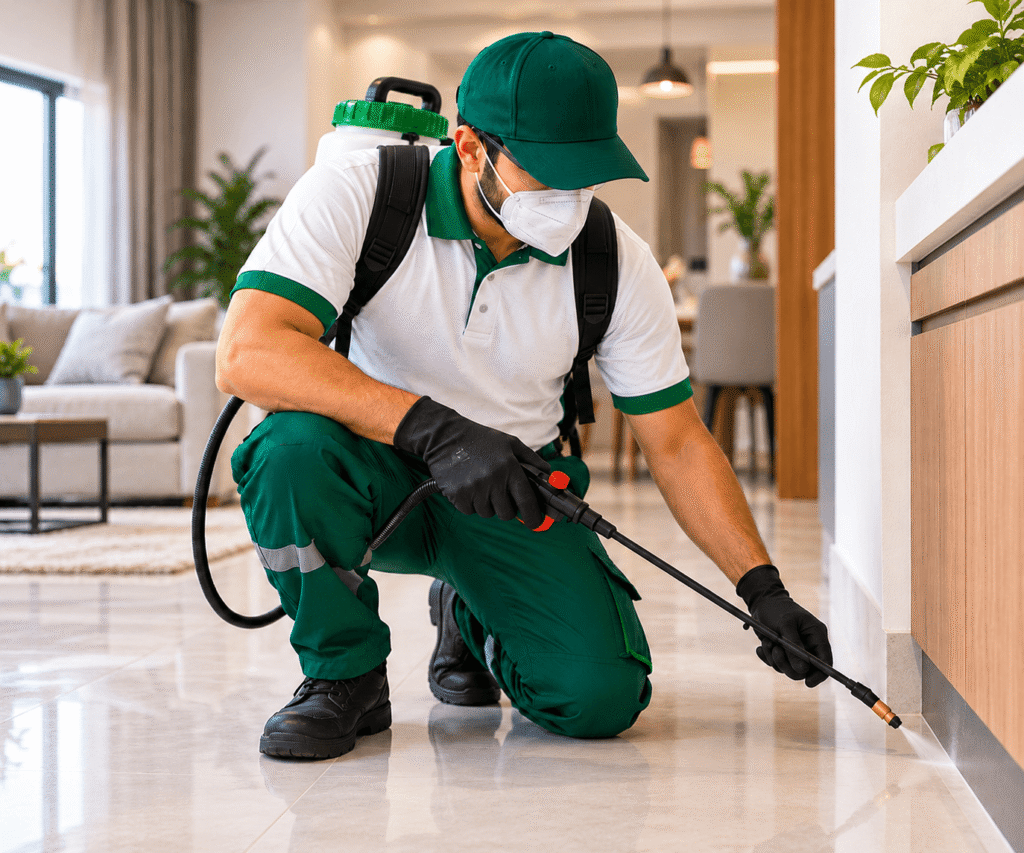
Book Professional Termite Control in Dubai
Termite activity can remain hidden while causing damage to wooden components and building materials. Early inspection and an appropriate treatment strategy can help limit damage and protect your property.
Malabar Pest Control provides professional termite inspection, treatment and preventive pest-management services across Dubai.
Contact our team to arrange an inspection and receive a termite-control plan tailored to your property.
Protect your property with professional termite inspection, targeted treatment and preventive management.